Case Study 03
Banking App in Neo Brutalism
Banking design defaults to sleek minimalism. This challenges that with Neo-Brutalism—bold aesthetics transforming familiar financial experiences.
Oct 18, 2025
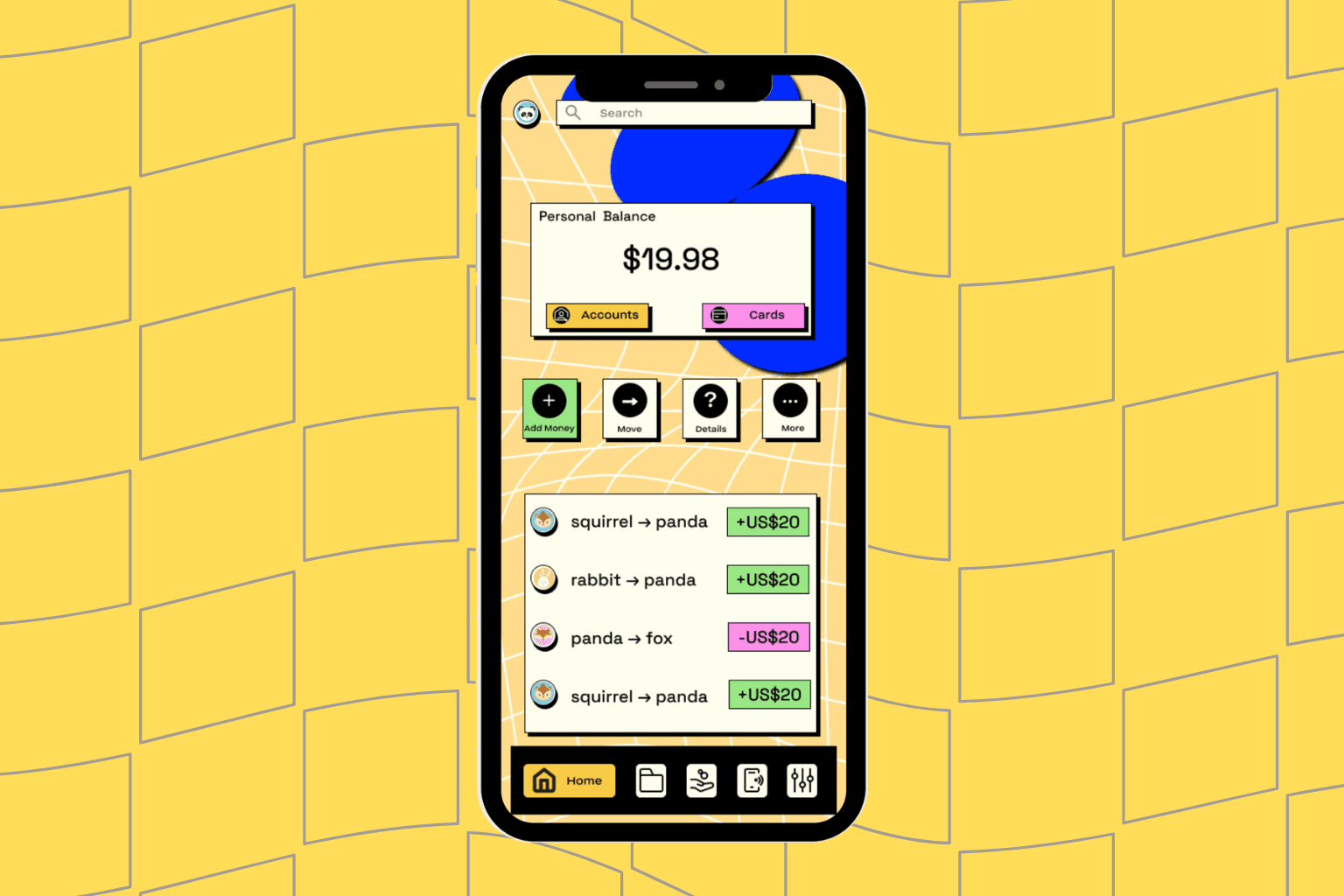
BankingApp: When Banking Apps Stop Looking Like Banks
Neo-Brutalist Redesign of Revolut
A visual experiment in breaking fintech's unwritten design rules
The Problem: Fintech Design Has Become Too Predictable
Open any banking app today. They all look the same.
Clean gradients. Rounded corners. Soft shadows. Minimal color. Safe typography.
It's elegant. It's trustworthy. It's... forgettable.
Here's what I noticed:
Every fintech app uses the same visual language to signal "trust" and "professionalism"
Younger audiences (Gen Z, younger Millennials) are used to brands that stand out, not blend in
Design has become so risk-averse that products feel interchangeable
There's an assumption that "serious" products like banking can't be playful, bold, or expressive
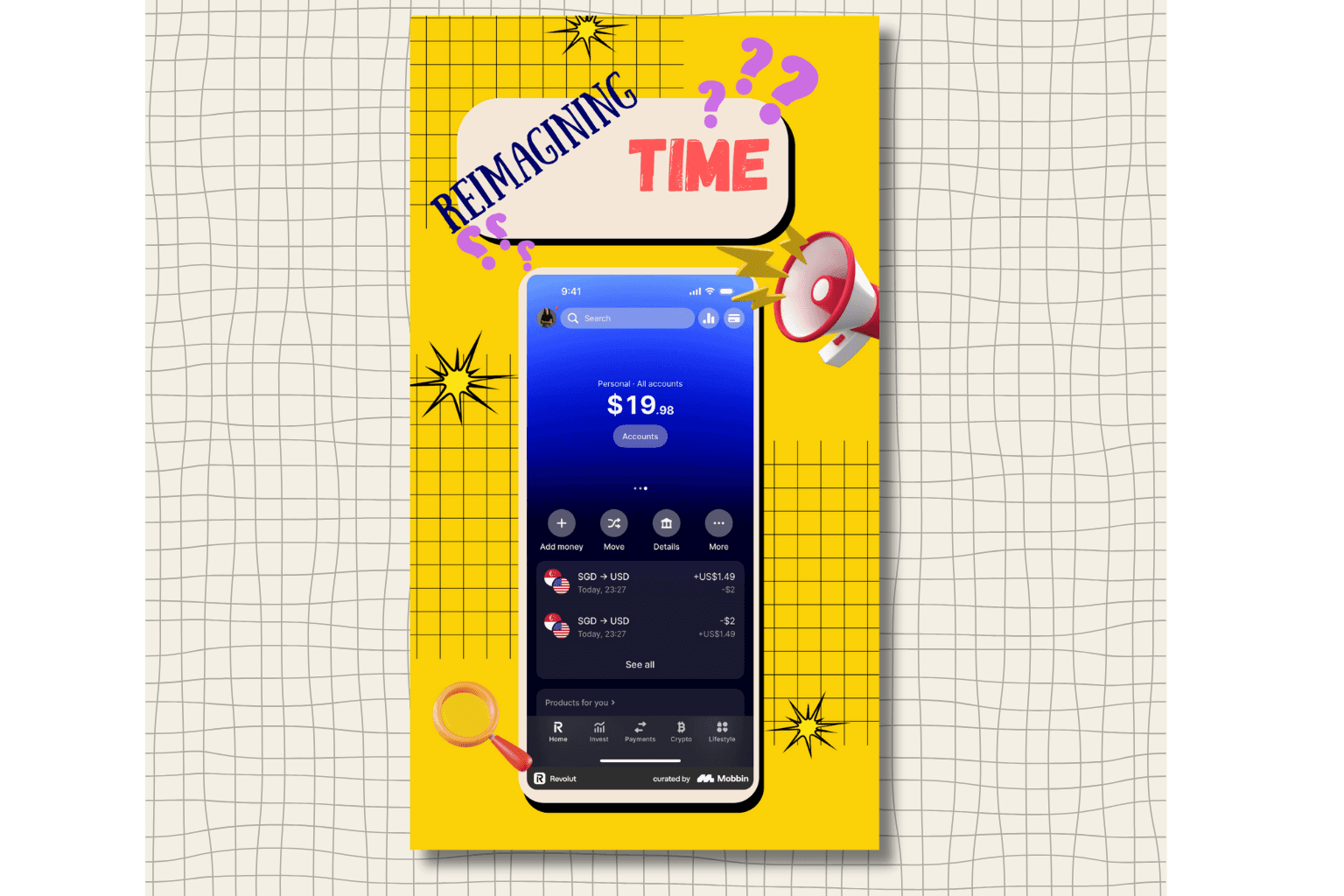
The question I wanted to answer:
What if a banking app rejected the rulebook entirely? What if it looked like it didn't care about fitting in?
This isn't about making Revolut "better" — it's about exploring how far design can push perception while keeping the product intact.
What I Did: Translate Revolut Into a Different Visual Language
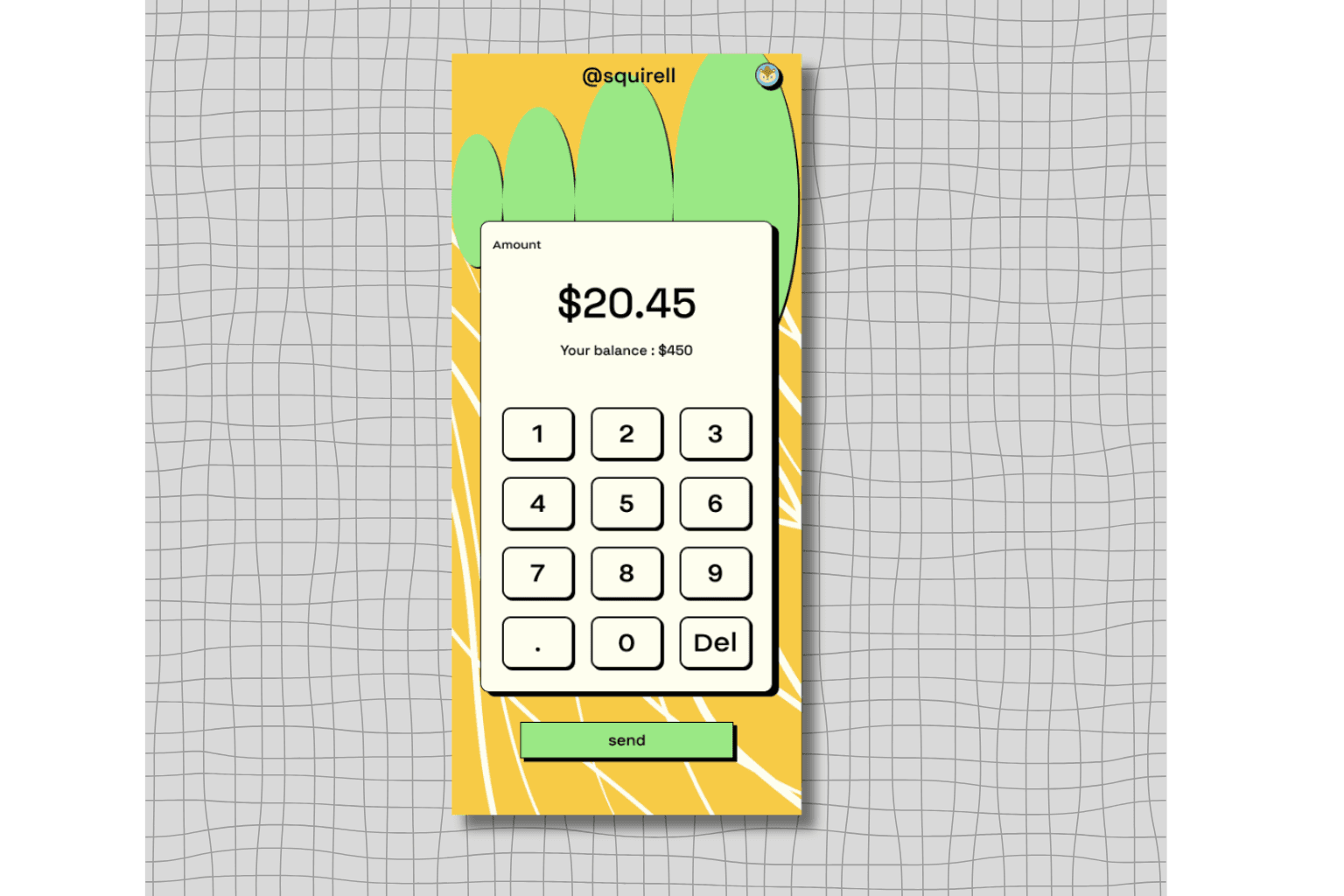
I took Revolut's existing interface and reimagined it in Neo-Brutalism — a style that's bold, nostalgic, raw, and unapologetically loud.
Why Neo-Brutalism?
Because it's the opposite of what fintech "should" look like. It's playful where banking is serious. It's chaotic where fintech is controlled. It challenges the assumption that money needs to feel sterile.
The Translation Process
1. Color Palette Overhaul
Out: Subtle gradients and muted tones
In: Bold, saturated primaries — electric blue, lime green, bright orange, hot pink
2. Shadows & Depth
Out: Soft, barely-there elevation
In: Strong, exaggerated drop shadows on every element for a tactile, almost physical feel
3. Abstract Shapes & Illustrations
Out: Clean icons and minimal graphics
In: Playful abstract shapes (flowers, blobs, squiggles) and thick-outlined illustrations that feel hand-drawn
4. Typography
Out: Sans-serif system fonts designed for legibility
In: Bold, outlined display fonts with character — the kind you'd see on vintage posters or street art
5. Layout & Structure
Kept the original Revolut flow intact — same information hierarchy, same interactions. Only the visual skin changed.
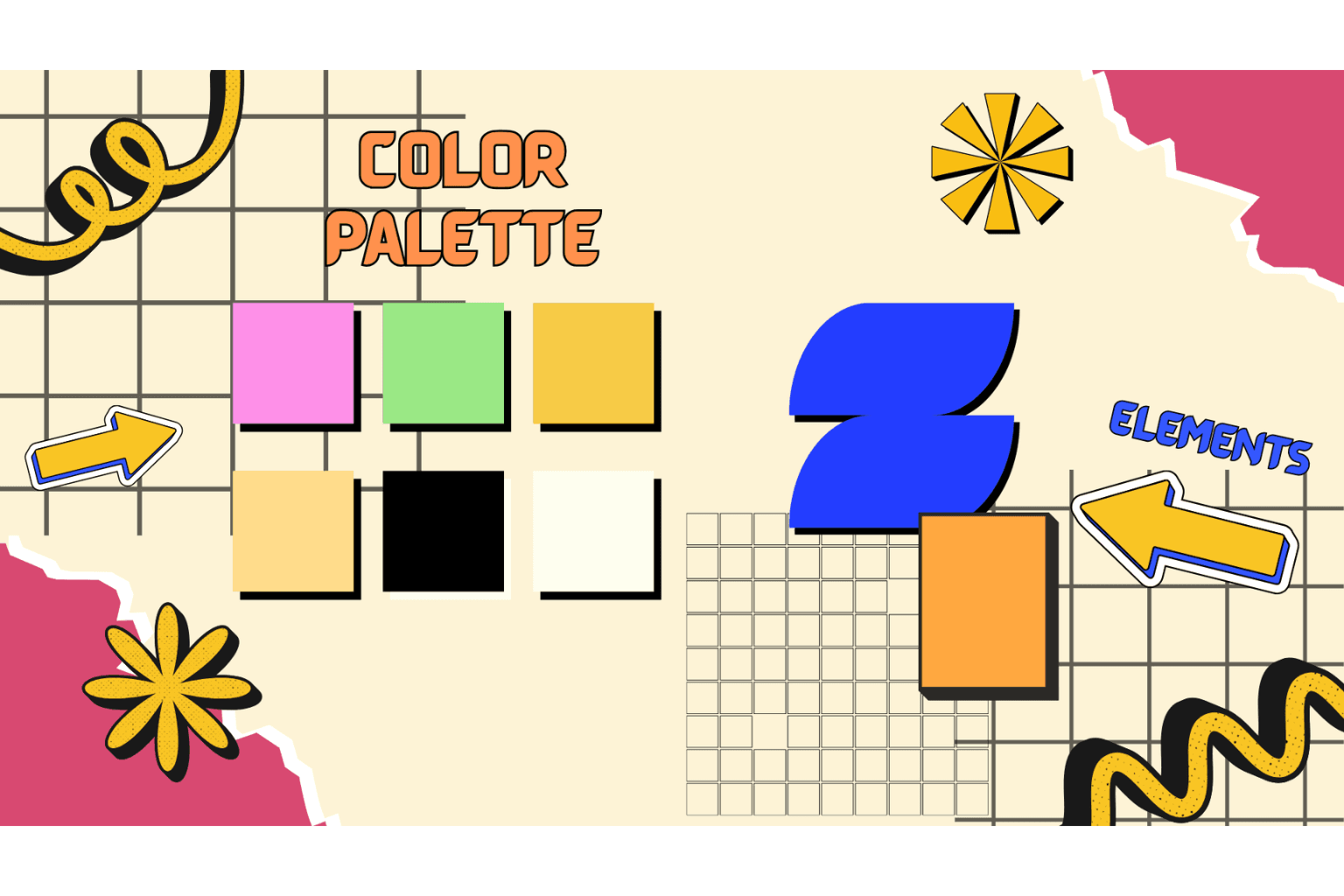
Color Palette and Elements for new design
The Resolution: Same Product, Completely Different Feeling
What Changed
Visual identity: From polished professional to raw and rebellious
Emotional tone: From "we're trustworthy" to "we're confident"
Target perception: Shifts from universal appeal to youth-culture alignment
What Stayed the Same
Core functionality and user flows
Information architecture
Interaction patterns
Usability fundamentals
The insight:
Design isn't just about making things work — it's about making people feel something. By changing only the aesthetics, the product went from "this is for everyone" to "this is for people who don't want to look like everyone."
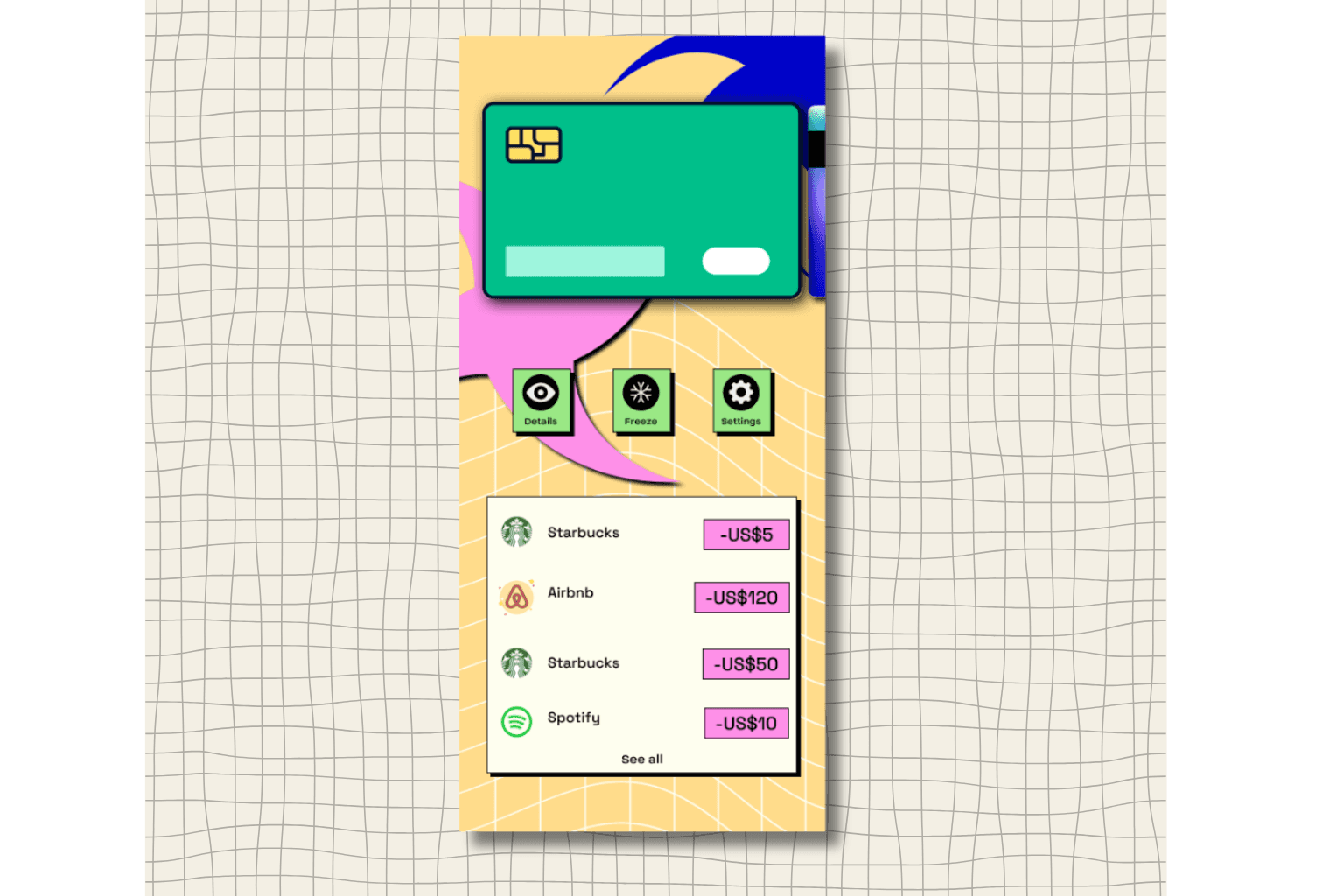
What This Experiment Proves
1. Visual language shapes product perception more than we admit
Same features, same flows — but one version feels safe and the other feels bold. That's pure design influence.
2. "Trust" in design is cultural, not universal
We assume banking needs soft colors and rounded corners to feel trustworthy. But for audiences raised on maximalist design (think TikTok, Discord, gaming UI), bold aesthetics might signal confidence, not chaos.
3. There's room to break the rules
Fintech doesn't have to look one way. The visual sameness across the industry isn't a requirement — it's a choice. And choices can be challenged.
4. Design can be an identity statement
For younger users, the tools they use are extensions of their identity. A Neo-Brutalist banking app says "I'm not like other banks" — and for some audiences, that's exactly what they want to hear.
The Takeaway
This project isn't prescriptive — it's exploratory. It's not saying Revolut should look like this. It's asking: what if?
Great design isn't fixed. It evolves, adapts, and sometimes breaks the rules to see what happens.
The most interesting products aren't always the ones that play it safe. They're the ones willing to experiment with how they show up in the world.