Case Study 02
MoodSense: From AI Chaos to Human Clarity
The original AI design created unclear flows. The solution? Restructure with clear hierarchy and intuitive navigation. Autistic users need clarity, not guesswork.
Nov 14, 2025
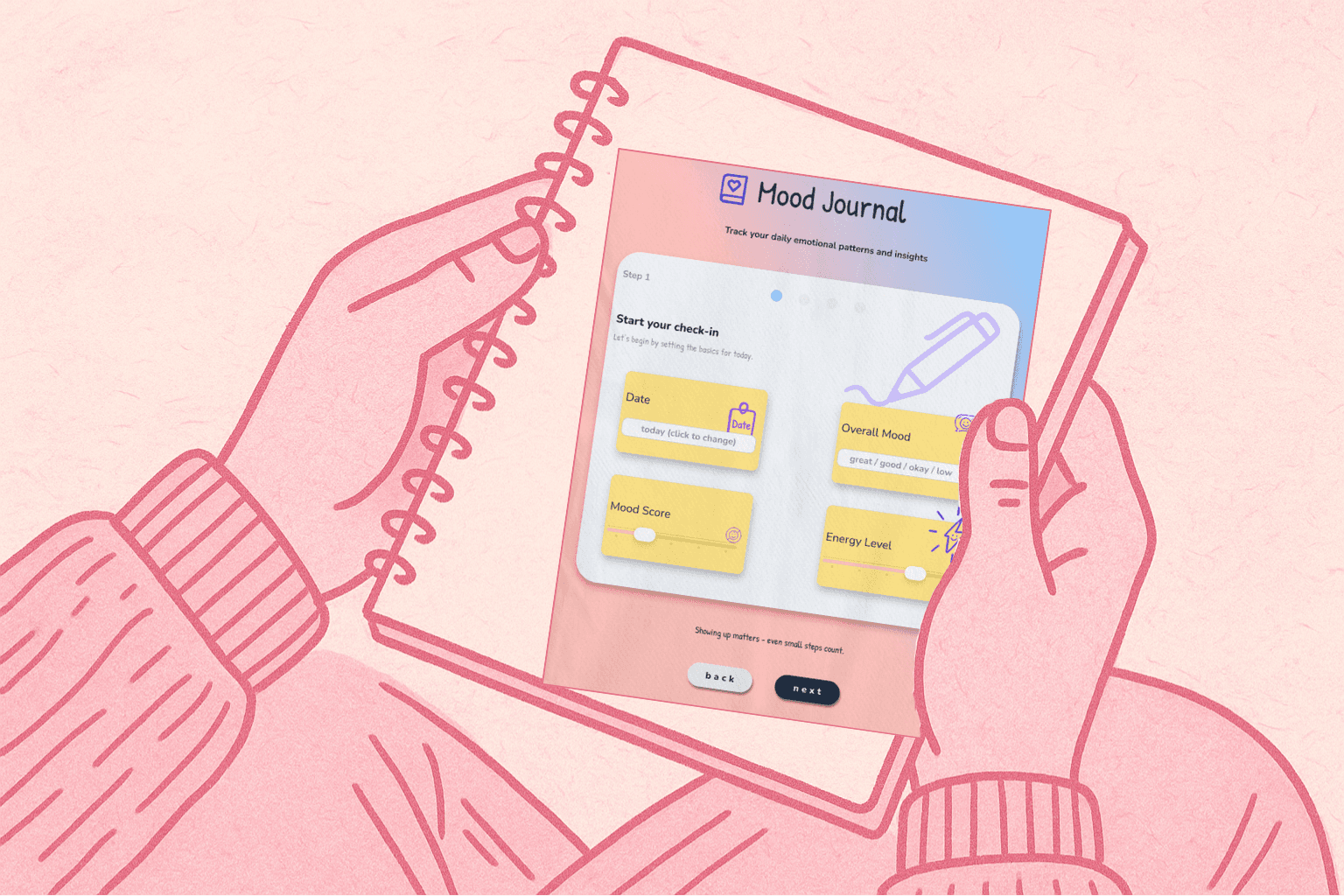
How I turned zero sign-ups into actual users — with no user base to test on
MoodSense is a journaling and message-analysis app built entirely with AI.
The founder had validated the idea, built the AI backend, and launched.
Then came the silence.
People visited the site. They saw the interface. They left.
Zero sign-ups. Zero journal entries. Zero users to learn from.
The issue? The entire app was AI-generated - including the interface. While AI can spin up code fast, it had created something that looked functional but felt wrong.
What users encountered:
A single, overwhelming form trying to capture everything at once
No structure, no guidance, no breathing room
Generic UI that felt cold for an intimate mental health tool
Zero emotional framing for what was supposed to be a vulnerable, personal process
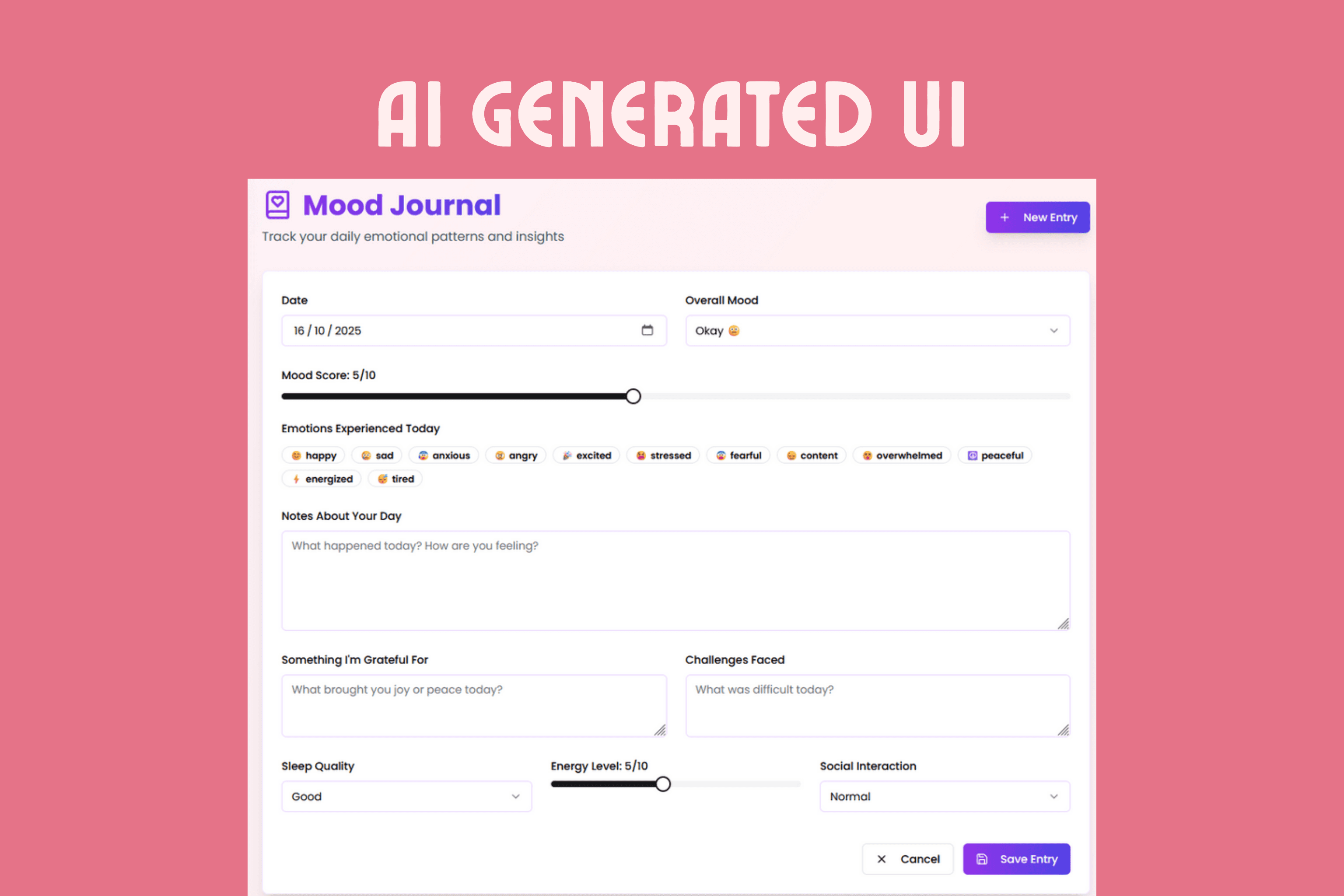
For users dealing with overwhelm, ADHD, or emotional sensitivity — the very people the app was designed for — this was an instant exit.
The founder knew something was broken. That's when he brought me in.
The Challenge: Fix It Fast, With No Users to Ask
This was a classic early-stage startup scenario.
We didn't have:
An existing user base to interview
Budget for formal usability testing
Time for lengthy research cycles
Analytics infrastructure set up yet
We did have:
Traffic arriving but immediately bouncing
Feedback from 5-6 people who'd visited but didn't sign up (common themes: "too much at once," "unclear what I'm getting into")
A clear hypothesis: the AI-generated form was the problem
The need to ship something people would actually try
My role: Eliminate the biggest barrier to entry so we could start learning from real users instead of guessing.
What I Did: Work With What I Had, Design for What Users Needed
Discovery Without Users
Without an existing user base, I worked with the available signals:
1. Heuristic Evaluation
I audited the existing flow against UX principles for cognitive load, progressive disclosure, and mental health app patterns.
2. Competitive Analysis
I studied how successful mental health apps (Calm, Headspace, Daylio) structure their onboarding — especially for users who might be anxious or overwhelmed.
3. Founder Intelligence
Direct feedback from people who bounced: "too much at once," "unclear what I'm getting into," "felt clinical, not supportive."
4. Behavioral Signals
Traffic data showed a clear pattern: people would land, see the form, and exit. The drop-off wasn't about unclear value — it was about the experience of trying to use it.
The Core Insight
The problem wasn't the AI features. It was the barrier to experiencing them.
One massive form. No steps. No context. No warmth. Just "fill this out" — in an app meant to help people process their feelings.
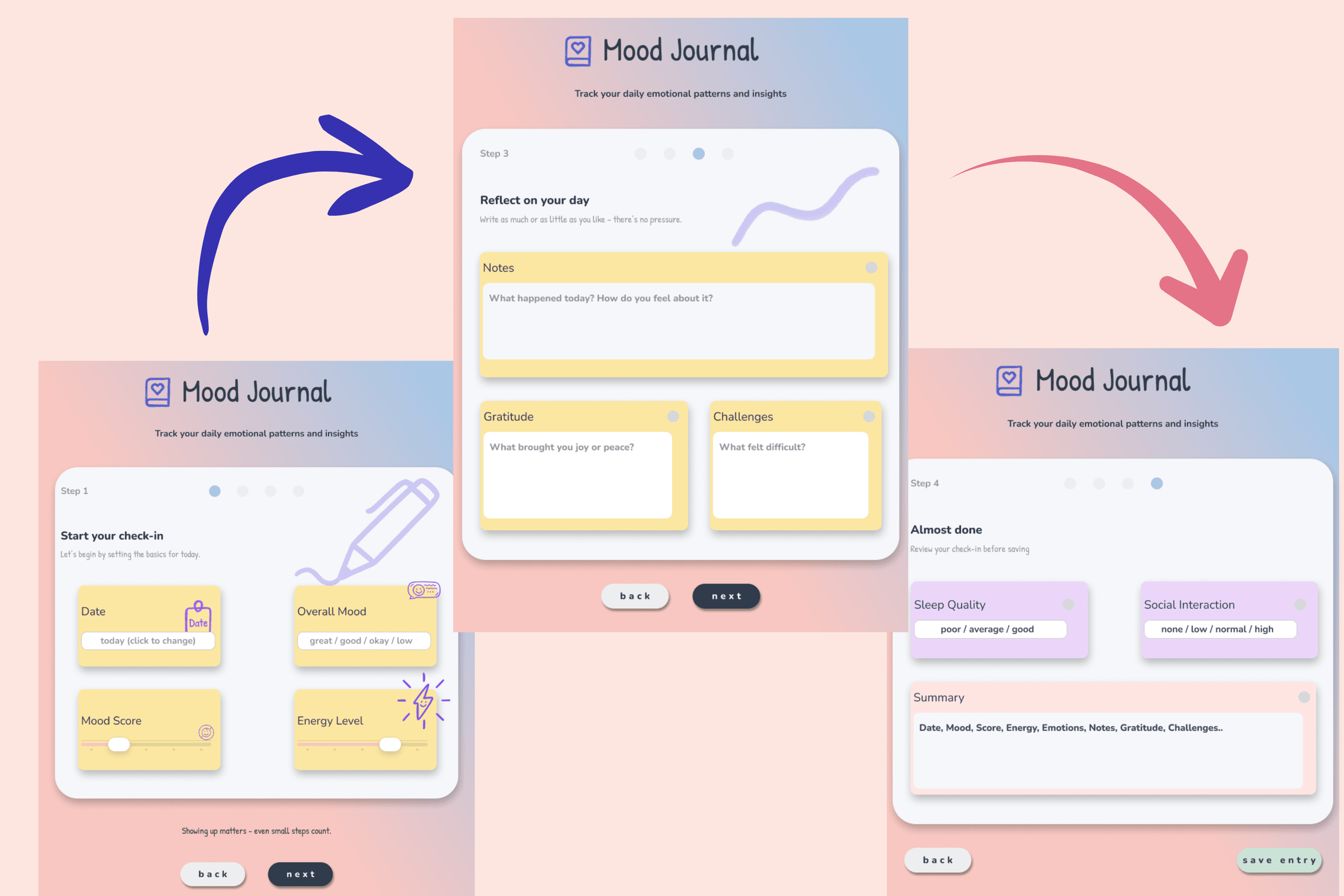
Prototype for the new UI flow for the form
The Solution: Break It Down, Guide Them Through
I redesigned the onboarding and journal flow around three principles:
1. Progressive Disclosure
Instead of one overwhelming form, I created a multi-step flow. Each screen had one job. Users could focus and move forward without cognitive overload.
2. Human-Centered Language
I rewrote the microcopy to feel warm, supportive, and clear. Not a clinical survey - a safe space for self-reflection.
3. Visual Calm
I replaced the generic AI-generated UI with a softer palette, intentional white space, and visual hierarchy that guided the eye naturally.
The Resolution: From No Users to First Users
Before
Traffic arriving → 0% conversion to sign-up
One overwhelming form blocking access
Users bouncing before experiencing any features
No journal entries, no data, no learning
After
First successful sign-ups within 2 weeks of redesign going live
A clear landing page that explains the purpose upfront
Multi-step flow that reduces cognitive load
Users completing onboarding and reaching their first journal entry
Foundation set for measuring retention and engagement
The shift: We went from "no one will even try this" to "people are using it" — the critical first step for any early-stage product.
Source : Quote from the founder of MoodSense
What I Learned
Designing for early-stage AI products isn't about perfection — it's about removing barriers to learning.
The founder moved fast with AI tooling to validate the concept. My job was to make that concept approachable enough for real humans to try — so we could start collecting the feedback that would make it great.
Sometimes the best design decision isn't the most innovative one. It's the one that gets users in the door so you can learn what they actually need.
Key takeaways:
For mental health tools, UX is care
Cognitive load is invisible but deadly for conversion
You can make strong design decisions with imperfect data if you understand the fundamentals
Getting from 0 to 1 users requires different design thinking than optimizing for growth